Thursday, 10 April 2014

The slow march of spring

The snow is finally melting significantly in southwestern Ontario, with daytime temperatures creeping up into the double digits.  The Grand River that runs through Fergus and Elora was quite high this past weekend, and Caitlyn and I enjoyed watching huge ice floes crash over the dam.  I am also starting to see more of the hardiest insectivorous migrants returning including tree swallows and the always hardy eastern phoebe. The warblers and a significant push of other neo-tropical migrants should be just around the corner!

The mighty Grand River


Hooded Mergansers and Mallards at Columbia Lake, Waterloo

Eastern Phoebe at Columbia Lake

Saturday, 5 April 2014

Swallows are back!

I stopped by several spots in Guelph that I like to check for birds in the spring, and was rewarded with very little.  The cold temperatures and northern winds seem to be holding back a lot of migrants south of the border.  However, I did manage to see my first tree swallows of the year at Riverside Park as well as a horned grebe coming into breeding plumage.  The tree swallows in particular were a nice sight for winter weary eyes, although I'm not sure how they are finding enough insects to eat in the weather today which was just above zero with frigid wind chills.  I snapped a few crappy record shots. Check it out:

Tree swallows on the far side of the river


Check out those horns on the horned grebe!

A beautiful bird once it gets into breeding plumage

Wednesday, 2 April 2014

Migration is underway!

With the (slightly) warming temperatures, we are starting to see an influx of migrants into southern Ontario!  Keep an eye and ear out for tundra swans, geese and other waterfowl heading north overhead.

I stopped by the Aylmer Wildlife Management Area after work one day with Pat and we were both rewarded with as many as 300 tundra swans.  Although that may sound like a lot, it pales in comparison to the reports coming in from areas like Long Point where as many as 3,000 were observed and the Pinery area where 15,000 were reported!


Sunday, 30 March 2014

Niagara River

Caitlyn and I headed down to Stevensville on Friday to visit the in-laws, and I was able to squeeze in some time to bird the Niagara River.  This is definitely one of my favourite spots to bird watch in Ontario, mainly because of the great diversity of birds present as well as all the different spots to stop and look for them along the river.  This time of the year the birding is not as good here as during the fall, however, I was still able to spot a bunch of migratory harbingers of spring including killdeer, sandhill cranes, northern pintail and many others.

Highlights of the trip included a good assortment of ducks and a red-necked grebe on the river, tufted titmouse at Dufferin Islands, glacous gull at Adam Beck and little gulls at the Queenston Marina (skunked again on the black vulture at Queenston overlook...).

I unfortunately wasn't able to get any good shots that you would want to see.  I did manage to snap a distant photo of one of the adult little gulls. 

This adult shows off the characteristic pale wing edges that separate the similar bonaparte's gull
The dead give away for this guy is the dark underside of the wings that shows up at a great distance.  Bonaparte's gulls will show white below.  Try not to get motion sick, this guy was really far away!

Thursday, 27 March 2014

Brown Creeper

Here are some pictures of a brown creeper that I saw in Waterloo a little while back.  I thought I would post the pictures since I think it's a neat little bird!  As the name suggests, it creeps vertically along the trunk of trees searching for any bugs that might be hiding in the bark.


Wednesday, 26 March 2014

Murder on the Grand! **Warning Graphic Nature Scene*

I was out the other day with a friend of mine after work near the Grand River and we came across this scene.  Warning, some of these images are graphic, the circle of life sometimes isn't so pretty.  This white-tailed deer was killed by Coyotes.


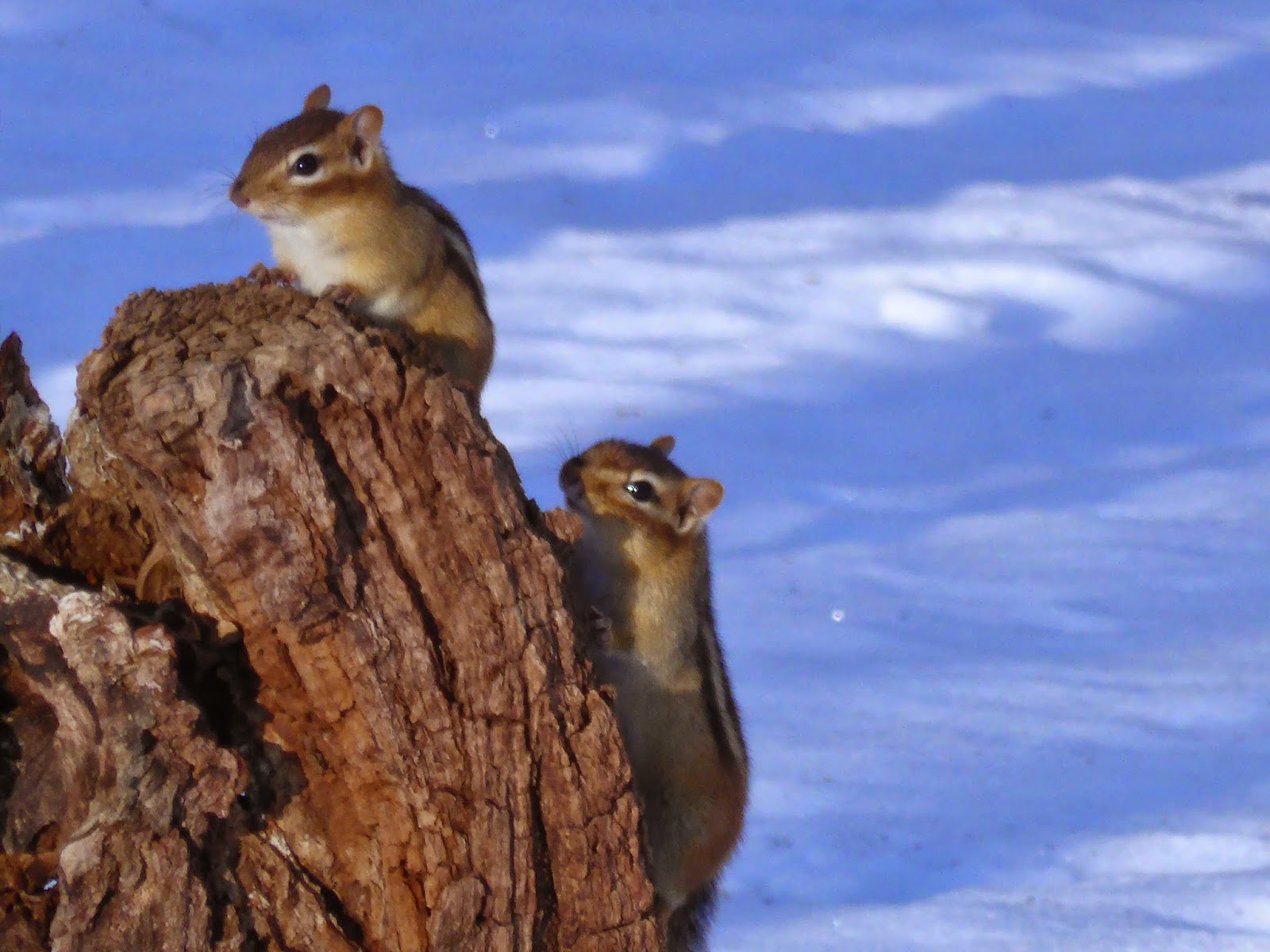
I find it interesting to look at the tracks of the wildlife that were consuming the deer.  We even found that the friendly little eastern chipmunks were feeding on the carcass and dragging little bits of the deer into their holes.

We also discovered a rare plant in the area, American columbo.  Credit to Andrew for spotting and identifying these plants.  This species has an S-rank of S2 meaning that this species is imperiled in the province.  This status is typically reserved for species with 20 or fewer known occurences in Ontario.

American Columbo remains visible as this dry stalk in the winter

Here is another rare plant (S3-vulnerable in Ontario) that we found to be present in good numbers along the Grand River, Pignut Hickory:


Some cute chipmunks leaving their den after a long winter!


Thursday, 20 March 2014

Florida Part 3/3; Dry Tortugas National Park

One of the most exciting parts of our trip to Florida was visiting Dry Tortugas National Park.  Dry Tortugas is a tiny island that is 110km and a 2.5hr boat ride from Key West.  We took the high speed catamaran 'Yankee Freedom', and we were not disappointed!  Dry Tortugas is well known for its beaches, world class snorkeling, pelagic birding and the massive Fort Jefferson which is the largest masonry structure in the US, containing 16 million bricks!  The fort was later used as a prison, and even once housed some of the men who conspired to assassinate Abraham Lincoln.

Arrival at the Dry Tortugas dock
Entrance to Fort Jefferson


You can walk all around the fort on the moat wall

Some of the clearest water I have ever seen
We went snorkeling at various locations on the island and were amazed by the numbers of colourful fish and coral! We kept our eyes out for hammerhead sharks, sea turtles and the resident American crocodile, but didn't see them.


The snorkeling was amazing! 


Caitlyn walks down the beach, Yankee Freedom is in the background

Dry Tortugas is well known as a birding hotspot, in particular for the massive colony of Sooty Terns, Brown Noddys, Magnificent Frigatebirds and Masked Boobys
Swarm of nesting birds


After snorkeling, birding and lounging on the beach, we decided to take a walk around the historic Fort Jefferson.


We took the spiral staircase to the top of the wall
View from the top
View inside the walls from the top of the walls


Walking path along the top of the fort wall

One of many fort cannons.  Range for these beasts was 3km!

A nice quiet spot inside the walls

Great Egret hunting on Dry Tortugas
After checking the fort out, I had to go get another look at the bird breeding colonies.  I tried to get a few closer photos of the subjects buzzing around.

Brown Noddy gathering nesting material
Brown Noddys
Sooty Terns!

Researchers trying to catch Sooty Terns to make some measurements

Researchers measuring/banding terns
Breeding male Magnificent Frigatebird with his throat pouch inflated

Ruddy Turnstones on the beach

Heading back to the ferry after an amazing day on Dry Tortugas!
Check out this video of the Dry Tortugas nesting colony!  I just noticed how bored Caitlyn looks in this video, I guess she didn't enjoy the birds as much as me hahaha!